What happens when the artwork disappears? The integrity of the work of art as right in the face of its destruction
DOI:
https://doi.org/10.24142/raju.v21n42a9Keywords:
Public art, Censorship, Copyright, Moral right of integrity, Destruction of art, Intellectual propertyAbstract
This article analyzes how the forced disappearance of a work of art, rather than signifying its end, can trigger its conceptual, legal, and political expansion. The research argues that the destruction of an artwork constitutes a violation of the artist's moral right of integrity—a spiritual bond between creator and creation that resists the logic of capital, which regards the work as a mere commodity. The methodology centers on the analysis of case studies, including Diego Rivera's mural at Rockefeller Center, the destruction of Sutherland's portrait of Churchill, the dismantling of Richard Serra's "Tilted Arc," the murals of Gabriel Calle Arango in Medellín, and "Las Cuchas Tenían Razón" in Bogotá. The results demonstrate that the act of physical annihilation immortalizes the works' message and the controversies that surrounded them, transforming absence into a potent symbolic presence. The primary conclusion is that destruction is an act of power that violates the author's integrity; however, this aggression, unlike in ephemeral art, ironically expands the work's meaning, demonstrating that although its physical form may be destroyed, its message can re-emerge with even greater force.
Downloads
References
Apel, D. (1999). Diego Rivera and the Left: The destruction and reconstruction of the Rockefeller Center mural. Left History: An Interdisciplinary Journal of Historical Inquiry and Debate, 6(1). https://dx.doi.org/10.25071/1913-9632.5360
Bazcko, B. (2005). Los imaginarios sociales. Memorias y esperanzas colectivas. Nueva Visión.
Bernal-Sánchez, D., & Conde-Gutiérrez, C. (2017). Los derechos morales de autor como derechos fundamentales en Colombia. Revista La Propiedad Inmaterial, (24), 53-66. https://revistas.uexternado.edu.co/index.php/propin/article/view/5197/6264
Bruce, C. (2014). The controversy at Rockefeller Center: Phantom publics, aesthetic barbarians. Advances in the History of Rhetoric, 17(1), 65-75. https://dx.doi.org/10.1080/15362426.2014.886931
Caballero Leal, J. L. (2004). Derecho de autor para autores. Fondo de Cultura Económica.
Cabrera Sánchez, J. (2016). Antígona y la productividad de lo negativo: El acto político y las paradojas de la ética. Andamios, 13(31), 213-241. https://doi.org/10.29092/uacm.v13i31.434
Castellanos, P. (2008). El expresionismo abstracto, típicamente norteamericano. Archipiélago, (64), 59-62. https://www.revistas.unam.mx/index.php/archipielago/article/view/20125
Castellanos, P. (2017). Muralismo y resistencia en el espacio urbano. UAL.
Castilho Costa, M. C., & de Sousa Junior, W. (2018). Censura e pós- censura: Uma síntese sobre as formas clássicas e atuais de controle da produção artística nacional. Políticas Culturais em Revista, 11 (1). https://doi.org/10.9771/pcr.v11i1.28154
Cornago, Ó. (1978). Teatro postdramático: Las resistencias de la representación. En J. A. Sánchez Martínez (Ed.), Artes de la escena y de la acción en España 1978-2002 (pp. 219 - 238). Ediciones Universidad de Castilla-La Mancha.
Corte Constitucional de Colombia. (1996, 20 de junio). Sentencia C-276/96. https://www.corteconstitucional.gov.co/relatoria/1996/C-276-96.htm
Corte Constitucional de Colombia. (1998, 29 de abril). Sentencia C - 155/98. https://www.corteconstitucional.gov.co/relatoria/1998/C-155-98.htm
El Colombiano. (2013, 10 de mayo). Autor del mural de San Diego, reclama porque su obra fue borrada sin autorización. El Colombiano. https://www.elcolombiano.com/historico/autor_del_mural_de_san_diego_reclama_porque_su_obra_fue_borrada_sin_autorizacion-CBEC_241524
Felshin, N. (2001). ¿Pero esto es arte? El espíritu del arte como activismo. En P. Blanco, J. Carillo, J. Claramonte & M. Expósito (Eds.), Modos de hacer. Arte crítico, esfera pública y acción directa (pp. 73-94). Ediciones Universidad de Salamanca.
Franco-Daza, J. D., Garzón - Rodríguez, C., Gaviria - Mira, J., & López - Cárdenas, M. (2025). False positives in Colombia: State violence, ignorance and the epistemic struggles of victims. European Review of Latin American and Caribbean Studies, (119), 19-45. https://doi.org/10.32992/erlacs.11238
Freedberg, D., & da Silva Corrêa, F. (2021). O medo da arte: Como a censura se torna iconoclastia. Revista Concinnitas, 22(42), 23-52. https://dx.doi.org/10.12957/concinnitas.2021.63190
García Escudero, J. M. (1952). Censura y libertad. Arbor, 23(83), 177. https://www.cervantesvirtual.com/descargaPdf/n-35-1952/
Gauna Quiroz, J. J. (2024). Memorias subterráneas y mecanismos de censura: Exposiciones de arte, ‘El Tercer Mundo’ en Venezuela y ‘Queermuseu’ en Brasil. Anais do Museu Paulista: História e Cultura Material, 32, e15. http://dx.doi.org/10.11606/1982-02672024v32e15
Giménez, G. (2007). Estudios sobre la cultura y las identidades sociales. CONACULTAITESO.
Heide, T. P. (1996). The moral right of integrity and the global information infrastructure: Time for a new approach. UC Davis Journal of International Law & Policy, 2, 211.
HJCK. (2025, 14 de enero). Las cuchas tenían razón: el grafiti borrado sobre la búsqueda en La Escombrera. HJCK. https://hjck.com/reportajes/las-cuchas-tenian-razon-elgrafiti-borrado-sobre-la-busqueda-en-la-escombrera-rg10
Islas, T. (2008). La censura figurativa. Istor: Revista de Historia Internacional, 9(35), 67-90. https://dialnet.unirioja.es/servlet/articulo?codigo=2939999
Lanzaro, J. L. (1985). Movimiento obrero y reconstitución democrática ¿Convencionalidad neocorporativa o aplicaciones neoliberales? Revista Mexicana de Sociología, 47(2), 173-209. https://biblat.unam.mx/hevila/Revistamexicanadesociologia/1985/vol47/no2/10.pdf
Liendo, J. G. (2022). Censura al arte en las redes sociales: Análisis de las experiencias de los museos flamencos y vieneses. Transdigital, 3(6), 1-18. https://doi.org/10.56162/transdigital158
López Benítez, P. (2021). Los derechos morales y su aplicación en las obras de arte público. Universidad Externado de Colombia.
Marín, G. (2000). Los viejos abuelos. Editorial Guillermo Marín.
Marxen, E. (2022). Las artes como forma de resistencia en tiempos pandémicos. Quintana. Revista de Estudos do Departamento de Historia da Arte, (21), 1-23. https://doi.org/10.15304/quintana.21.8374
Mignolo, W. D., & Gómez Moreno, P. P. (2021). Reconstitución estética decolonial. Universidad Distrital Francisco José de Caldas.
Morris, O. (2024, 24 de octubre). Richard Serra’s ‘Tilted Arc’—A sculpture so controversial it was put on trial. Artnet News. https://news.artnet.com/art-world/richard-serra-tilted-arc-2463230
Palacio Puerta, M., Jiménez Jiménez, L., & Sánchez Sierra, A. (2025). Arbitrabilidad de los derechos morales de autor en la República de Colombia. Propiedad Inmaterial, (39). https://doi.org/10.18601/16571959.n39.03
PBS. (s.f.). Diego Rivera. American Experience. https://www.pbs.org/wgbh/americanexperience/features/rockefellers-rivera/
Pezzi Parode, F., & Zapata, M. (2018). Filosofia, estética e arte: Ensaio sobre transgressão e censura. Veritas (Porto Alegre), 63(2), 575-594. https://doi.org/10.15448/1984-6746.2018.2.31295
Pineda Bermúdez, J. E. (2023). La censura en el arte colombiano: Dos constituciones, cuatro artistas. Universidad de Antioquia.
Pino Villar, M. P. (2016). Arte y política: El arte mendocino de los setenta. Censura, circulación alternativa y debates del período. CONICET.
Richard, N. (1994). La insubordinación de los signos: Cambio político, transformaciones culturales y poéticas de la crisis. Editorial Cuarto Propio.
Sanglard, F. N., Orlandini, M. G., & Oliveira, B. S. (2024). Censura à arte como sintoma do autoritarismo brasileiro. Latin American Research Review, 59(1), 160-184. https://doi.org/10.1017/lar.2023.29
Scott, R. L. (1977). Diego Rivera at Rockefeller center: Fresco painting and rhetoric. Western Journal of Communication, 41(2), 70-82. https://doi.org/10.1080/10570317709389599
Skowlund, N. (2025). Painting a truer picture. Index on Censorship, 54(1), 46-48. https://doi.org/10.1177/03064220251332625
Treece, J. M. (1968). American law analogues of the author’s ‘moral right’. The American Journal of Comparative Law, 16(4), 487-506. https://doi.org/10.2307/838765
Valicenti, E. (2017). Los usos creativos de obra protegida por el derecho de autor frente al derecho al acceso al arte y a la cultura. Razones para pensar una nueva excepción. Cartapacio de Derecho, (32), 1-19. https://agora.edu.es/servlet/articulo?codigo=6313812
Vanbrabant, B. (2005). Corpus mechanicum versus corpus mysticum: Des conflits entre l’auteur d’une oeuvre et le propriétaire du support. Revue de la Faculté de Droit de l’Université de Liège, (4), 490-562. https://orbi.uliege.be/bitstream/2268/14129/1/Conflit_auteur-propri%C3%A9taire.pdf
Vargas-Álvarez, S. (2020). La destrucción del arte. Iconoclasia y vandalismo desde la Revolución Francesa. El Ornitorrinco Tachado, (12), 1-3. https://ornitorrincotachado.uaemex.mx/article/view/14540
Vargas-Chaves, I., Varón-Vanegas, C. A., & Acevedo-Caicedo, F. J. (2021). El derecho a la integridad de la obra artística: El mural del Centro Comercial San Diego como estudio de caso. Arte, Individuo y Sociedad, 33(3), 723-740. https://dx.doi.org/10.5209/aris.69551
Vargas-Chaves, I. (2026). Derecho de autor y derechos conexos. Tirant Lo Blanch.
Villa-Gómez, J. D., & Avendaño-Ramírez, M. (2017). Arte y memoria: Expresiones de resistencia y transformaciones subjetivas frente a la violencia política. Revista Colombiana de Ciencias Sociales, 8(2), 502-535. https://dialnet.unirioja.es/servlet/articulo?codigo=6048088
Yoldi, B., & Gozgou, D. (2009). La destrucción del arte. Edicions de la Universitat de Barcelona.
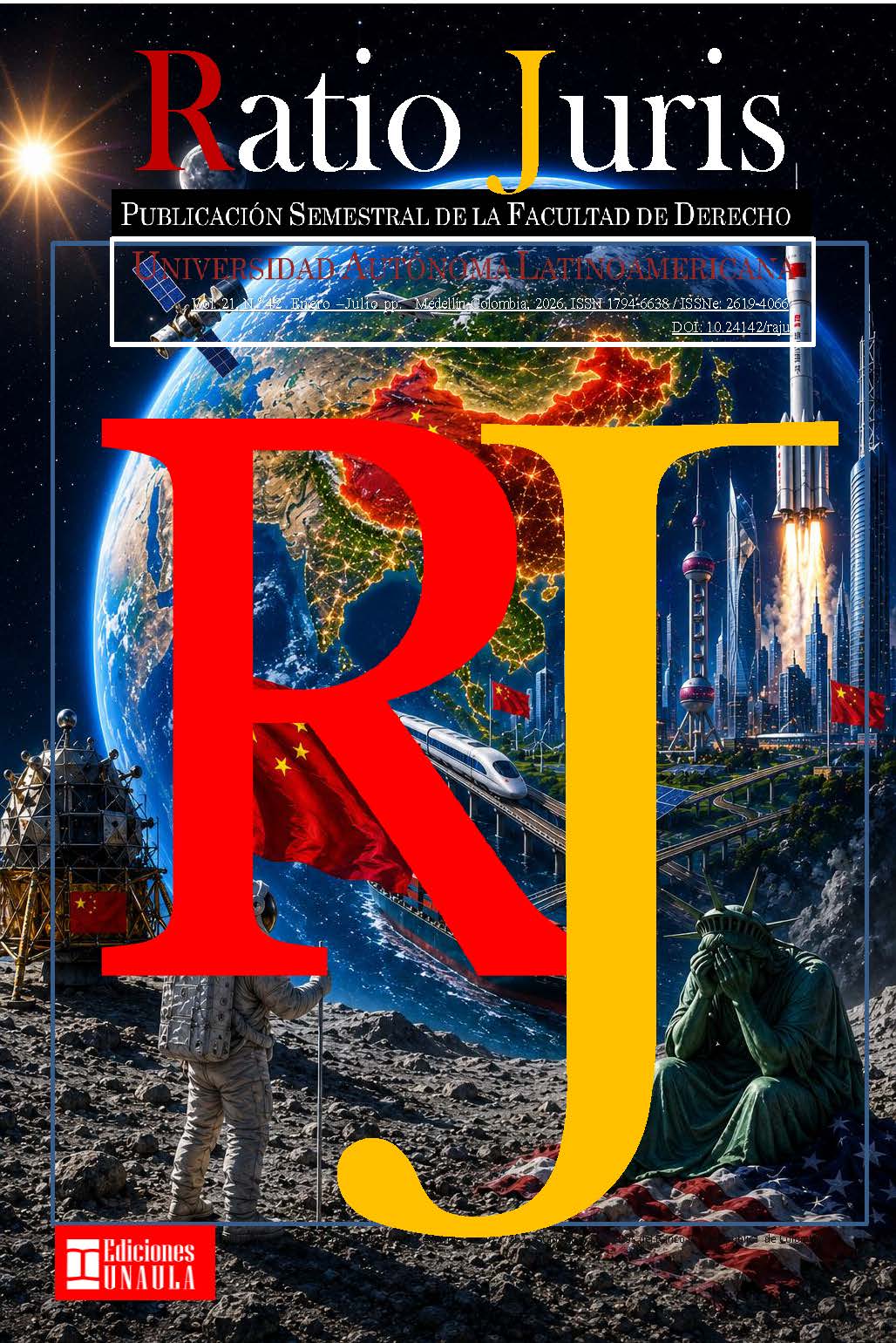
Downloads
Published
How to Cite
Issue
Section
License
Copyright (c) 2026 Iván Vargas-Chaves

This work is licensed under a Creative Commons Attribution-NonCommercial-ShareAlike 4.0 International License.
La rivista consente all'autore (s) di mantenere i diritti di pubblicazione senza restrizioni.
Le journal permet à l'auteur (s) de conserver les droits de publication sans restrictions.
The journal allows the author (s) to retain publication rights without restrictions.
La revista le permite al autor(es) retener los derechos de publicación sin restricciones
Die Zeitschrift ermöglicht es dem / den Autor (en), Veröffentlichungsrechte ohne Einschränkungen zu behalten.
A revista permite que os autores mantenham os direitos de publicação sem restrições.