Geralidades sobre a gestão do risco como direito coletivo
Palavras-chave:
Constituição, Direito ambiental, Direitos coletivos, Gestão do riscoResumo
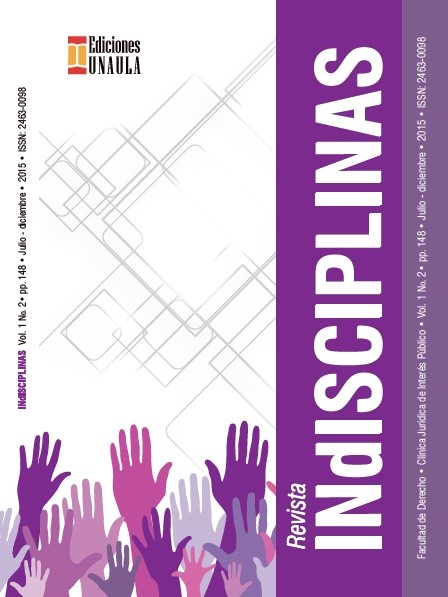
O texto pretende fazer uma descrição do conceito da gestão do risco desde seus âmbitos constitucionais e legais desde sua natureza como direito coletivo desde os espaços de reflexão que tem propiciado a Clínica Jurídica de interesse público da universidade Autônoma Latinoamericana.
Downloads
Referências
Arango, R. (2005). El concepto de derechos sociales fundamentales. Colombia, Bogotá: Editorial Legis.
Beck, U. (2002). La sociedad del riesgo y el Estado de bienestar. España, Madrid: Siglo XXI.
Cardona, O. D. (2005). “La gestión del riesgo colectivo”. Recuperado de file:///C:/Users/usuario/Downloads/Gestion_Riesgo_Ciudad_Laboratorio21-09-05LaRED%20(1)%20(1).pdf
Campos, A., Niels, H., Díaz, C. y Rubiano D. (2012). Análisis de la gestión del riesgo de desastres en Colombia Un aporte para la construcción de políticas públicas. Colombia, Bogotá: Banco Mundial.
Oficina en Colombia del Programa de las Naciones Unidas para el Desarrollo, Escuela Virtual PNUD (2013). “Mapeo institucional, actores relacionados con el abordaje del cambio climático en Colombia. Proyecto de Integración de Riesgos y Oportunidades del Cambio Climático en los Procesos Nacionales de Desarrollo y en la Programación por Países de las Naciones Unidas”. Colombia, Bogotá: s.e.
“Defensoría Delegada para los derechos Colectivos y del Ambiente”. Recuperado de http://www.defensoria.gov.co/es/public/defensoriasdelegadas/1447/Para-los-derechos-colectivos-y-del-ambiente.htm
Ferrajoli, L. (2001). Los fundamentos de los derechos fundamentales. España, Madrid: Trotta.
Fiss, O. (1976). “Groups and the equal protection clause”. Revista Philosophy and Public Affairs, (5), pp. 107-177.
Lavell, A. (2000). Draft Annotated Guidelines for Inter – Agency Collaboration in promgramming for Disaster Reduction. Estados Unidos, Nueva York: Organización de las Naciones Unidas.
López, N. M. (2001). “Sobre los derechos colectivos”. En F. J. Ansuátegui (ed.). Una discusión sobre Derechos Colectivos (pp. 17-46). España, Madrid: Editorial Dykinson.
Peces-Barba, G. (2001). “Los derechos colectivos”. En F. J. Ansuátegui (ed.). Una discusión sobre Derechos Colectivos (pp. 67-76). España, Madrid: Editorial Dykinson.
Unidad Nacional para la Gestión del Riesgo de Desastre- Colombia (s.f.). “Guía para formación Comunitaria en Gestión del Riesgo de Desastre”. Recuperado de file:///C:/Users/usuario/Downloads/Guia-para-formacion-comunitaria-grd.pdf
Unidad Nacional para la Gestión del Riesgo de Desastre- Colombia (s.f.). “Guía Comunitaria Para la Gestión del Riesgo de Desastre”. Recuperado de file:///C:/Users/usuario/Downloads/2-guia-comunitaria-grd.pdf
Jurisprudencia
Corte Constitucional
CConst, T-041/2011, H. A. Sierra.
Consejo de Estado
CE, 11 jun. 2004, exp. 0142301, L. López.
CE, 21 feb. 2007, exp. 35501, E. Gil.
CE, 22 ene. 2009, exp. 0300201, M. C. Rojas.
CE, 8 jun. 2011, sentencia 1330, J. O. Santofimio.
Normas y Leyes
L. 46/1989
L. 388/1997
L. 400/1997
L. 472/1998
L. 1523/2012
D. 919/1989
Downloads
Publicado
Como Citar
Edição
Seção
Licença
Autoria de trabalhos científicos
A fim de estabelecer a autoria de trabalhos científicos Universidad Autonoma Latinoamericana considera que, nas suas publicações se entende como um autor:
- Quem participou da formulação do problema e da hipótese.
- Quem conceituou, criou, desenhou, estudou, reviu, analisou ou interpretou os dados.
- Quem participou da elaboração criativa ou do manuscrito, ou edição da análise estatística.
- Quem desempenhou um papel de liderança na versão final do trabalho ou escreveu uma parte do texto.
- Quem participou da interpretação dos resultados
- Quem é o investigador principal do projeto de pesquisa e gerou a ideia central de todo o manuscrito.
- Quem tem a capacidade de explicar e defender porções de trabalho ou de estudo em locais acadêmicas ou públicas. "(CNRSI, 2008) [1].
- Quem é co-autor do trabalho para tomar parte em uma das etapas de pesquisa em qualquer um dos itens acima (Jornal Oficial da União Europeia, 2005)[1]
- A ordem dos autores e a determinação do autor correspondente. A ordem dos autores deve ser feita de acordo com as diretrizes aceitas na disciplina. (Riesenberg e Lundberg, 1990):
- O primeiro autor é quem mais contribuiu para o trabalho,
- É prática comum para os altos autor aparece no final, independentemente da sua contribuição e quem é responsável em obras coletivas
- O aluno pode trazer o primeiro rascunho, mas, no entanto, o pesquisador sênior pode reescrever o documento e colocar a sua assinatura como um autor
- O autor da correspondência também é:
- Liderança ou Liderança: mostra o número de artigos de um país ou instituição ou pesquisador
- Padrões de colaboração científica
[1] Lei 93 de 1998, sentença C-1023/12 do Tribunal Constitucional da Colômbia- 14. Inicialmente, a sentença em questão realizou um estudo completo sobre a proteção constitucional dos direitos autorais, com base em sua consagração no artigo 61 Constituição Política da Colômbia 1991 Assim, estabeleceu as seguintes regras a esse respeito:
14.1 A partir dos regulamentos nacionais e internacionais sobre o assunto, conclui-se que a proteção legal dos direitos autorais recai sobre todas as criações do espírito, no campo científico, literário ou artístico, independentemente do gênero, forma de expressão e independentemente do mérito literário ou artístico ou de seu destino. Dentro desta proteção e nos termos mencionados, livros, brochuras e outros escritos estão incluídos, sem excluir nenhuma espécie. Os direitos autorais contêm dois tipos de prerrogativas: direitos morais, relacionados à faculdade do criador, como pessoa natural, para que seu trabalho seja conhecido e mantenha sua integridade e propriedade, para que sejam pessoais, extra-patrimonial, imprescritível, inalienável e inalienável. Os direitos morais, nesse sentido, tratam de (i) o direito de divulgar o trabalho; (ii) o direito ao reconhecimento da paternidade intelectual; (iii) o direito ao respeito e integridade do trabalho, impedindo modificações não autorizadas; e (iv) o direito de retirada, que permite ao autor retirá-lo da negociação.
Por outro lado, os direitos autorais possuem, como o nome indica, conteúdo econômico e concentram-se no pagamento ao criador ou à pessoa singular ou coletiva que detém os direitos pelas atividades que envolvem a exploração da obra protegida. Entre as variáveis dessas faculdades estão (i) o direito de reprodução do material; (ii) o direito à comunicação pública não material, representação, desempenho público e radiodifusão; e (iii) transformação, tradução, adaptação e arranjo musical, bem como qualquer outra forma de uso da obra. Os empregadores e / ou financiadores devem garantir que os pesquisadores se beneficiem, em qualquer estágio de suas carreiras, da possível exploração de seus resultados de P&D por meio de proteção legal adequada, especialmente na área de proteção dos direitos de propriedade intelectual e de direitos autorais. As políticas e práticas devem especificar os direitos que correspondem aos pesquisadores e / ou, quando apropriado, a seus empregadores ou outras partes interessadas, incluindo entidades comerciais ou industriais externas, conforme previsto possivelmente sob acordos de colaboração específicos ou outros tipos de acordo. Co-autoria. Ao avaliar a equipe, as instituições devem valorizar positivamente a co-autoria, pois demonstra uma abordagem construtiva da prática de pesquisa. Portanto, os empregadores e / ou financiadores devem desenvolver estratégias, práticas e procedimentos que ofereçam aos pesquisadores, incluindo aqueles que estão no início de suas carreiras, as condições necessárias para que possam usufruir do direito de serem reconhecidos, mencionados e / ou citados, dentro de suas contribuições reais, como coautores de relatórios, patentes etc. ou publicar os resultados de suas próprias pesquisas, independentemente de seus supervisores ("A Comissão das Comunidades Europeias", 2005).